Thursday, 15 June 2017
Chemical Fizz
Wahlt
To observe & measure the chemical reaction between an acid and a base.
Chemical reactions involve the release of heat energy (exothermic) or the absorption of heat (endothermic). When reactants in this experiment meet, the temperature drops.
Other forms of energy can also be detected as the experiment proceeds. If you can hear anything, then sound energy is at work. Look foe movement this is kinetic energy.
Materials
measuring spoon or beaker
large measuring cylinder
5 ml Bicarbonate of soda (baking soda)
50 ml Vinegar
Hypothesis
When Bicarbonate of soda (base) and vinegar (acid) are mixed together, I think the mixture will fizz & increase towards the top.
Starting Volume: 55 ml
End Volume: 500 ml
Method
Carefully put 5 ml dry Bicarbonate of soda in a measuring cylinder.
Add 50 ml vinegar
Result:
The reaction was rapid (quick) and as it died down I could see the bubbles (foam) disappearing and the colour changed to a light brown.
Hypothesis:
My hypothesis was valid because I guessed the accurate amount for the ending volume and because if you add the right amount the Bicarbonate of soda & vinegar creates a chemical reaction.

Wednesday, 14 June 2017
It's a Solid... It's a Liquid... It's Oobleck!
It's a Solid... It's a Liquid... It's oobleck!
Key concepts :
Liquids and solids
Viscosity
Pressure
Materials
• 1 cup of water
• 1 to 2 cups of cornstarch
• Mixing bowl
Preparation
• Pour one cup of cornstarch into the mixing bowl, and dip your hands into it. Can you feel how smooth the powder is? It's made up of super-fine particles.
• Now pour the water in, mixing slowly as you go. Keep adding more water until the mixture becomes thick (and hardens when you tap on it). Add more cornstarch if it gets too runny, and more water if it becomes too thin.
• Add a few drops of food coloring if desired. (If you want to turn your Oobleck another hue, it’s easier to add the coloring to the water before you mix it with the cornstarch.)
• Oobleck is non-toxic, but please use caution when doing any science activity. Be careful not to get it in your eyes, and wash your hands after handling the Oobleck.
Procedure
• Roll up your sleeves and prepare to get messy! Drop your hands quickly into the Oobleck, then slowly lower your hands into it. Notice the difference!
• Hold a handful in your open palm—what happens?
• Try squeezing it in your fist or rolling it between your hands—how does it behave differently?
• What else can you do to test the mixture's properties?
Read on for observations, results and more resources.
Observations and results
What is happening when you squeeze the Oobleck? What is happening when you release the pressure?
Applying pressure to the mixture (oobleck) increases its viscosity (thickness). A quick tap on the surface of Oobleck will make it feel hard, because it forces the cornstarch particles together. But when you dip your hand slowly into the mix, and see what happens—your fingers slide in as easily as thoroughly (like liquid). Moving slowly gives the cornstarch particles time to move out of the way. The Oobleck mixture isn't your typical liquid—or solid. The cornstarch-and-water mixture creates a fluid that acts more like quicksand than water: applying force (squeezing or tapping it) causes it to become thicker. If you were trapped in a tub of Oobleck, what would be the best way to escape?
Tuesday, 13 June 2017
Monday, 29 May 2017


Wednesday, 17 May 2017

Friday, 12 May 2017
A bubble inside a bubble
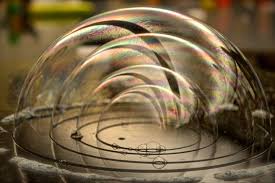 A bubble inside a bubble
Method:
- Pour about 100ml of water into a cup or a container. Add a tablespoon of granulated sugar to the water.
- Squeeze in detergent into the water. Stir the solution gently until the sugar dissolves. Now you will need a plastic straw of any kind ( doesn't really matter)
- It’s important that the the surface you work on be very clean, so that the bubbles will form properly. Use your fingers to spread some of the bubble solution onto the surface.
- Dip the end of the straw into the the soap solution so it’s covered completely. Blow a bubble onto the surface. Make it a large bubble. So that it you can fit in more bubbles.
- Dip and coat the straw completely again and gently push it inside the first bubble. Blow another bubble onto the surface inside the first bubble. Go for a third and a fourth and until you've got more than five or you’re satisfied with your achievement.
Wednesday, 12 April 2017

Subscribe to:
Posts (Atom)